Nonprofit CRM Software: 6 Data Management Mistakes to Avoid

What Is CRM Data Governance?
Nonprofit organizations rely on accurate donor and constituent information to build relationships, manage fundraising campaigns, and make informed decisions.
But even the best nonprofit CRM software can fall short if the data within it is incomplete, outdated, inconsistent, or difficult to access.
Whether your organization is implementing a new CRM, migrating from spreadsheets, or improving an existing donor database, establishing strong data management practices is essential.
A well-managed nonprofit CRM helps organizations maintain reliable donor records, improve fundraising reporting, streamline communication, and strengthen constituent engagement.
Without a clear data governance strategy, however, nonprofits may encounter duplicate donor profiles, inconsistent reporting, limited user adoption, and missed fundraising opportunities.
In this article, we’ll explore six common nonprofit CRM data management mistakes and how to avoid them.
What Is Nonprofit CRM Data Governance?
Nonprofit CRM data governance refers to the policies, processes, and responsibilities an organization establishes to maintain accurate, secure, and usable constituent information.
For nonprofits, this includes managing data related to donors, donations, fundraising campaigns, volunteers, alumni, and other constituent relationships.
An effective data governance strategy helps ensure information is collected consistently, maintained accurately, and accessible to the appropriate team members.
Strong nonprofit CRM data governance typically focuses on four key areas:
Data quality: Maintaining accurate, complete, consistent, and up-to-date donor and constituent records.
Data security and compliance: Protecting sensitive information through appropriate access controls and data handling practices.
Data ownership and management: Establishing clear responsibilities for maintaining records and enforcing data standards.
Data access and sharing: Ensuring authorized employees can access the information they need to perform their roles effectively.
These principles are essential for organizations looking to maximize the value of their nonprofit donor management software.
1. Implementing Nonprofit CRM Software Without a Data Strategy
One of the most common mistakes nonprofits make is implementing CRM software without first establishing a clear data management strategy.
While selecting the right technology is important, organizations must also determine how the system will support their fundraising, engagement, and reporting objectives.
Without a defined strategy, teams may collect information inconsistently, create disconnected processes, or struggle to measure results.
How to Avoid This Mistake
Start by identifying what your organization wants to accomplish with its nonprofit CRM.
For example, your priorities might include improving donor retention, increasing fundraising visibility, consolidating constituent records, or reducing manual administrative work.
Then establish a data governance roadmap that outlines:
What constituent information should be collected
How donor records should be organized
Who is responsible for maintaining data
Which teams require access to specific information
How data quality and CRM performance will be measured
A clear strategy helps ensure your nonprofit CRM software supports organizational goals rather than simply becoming another database.
2. Allowing Inaccurate or Duplicate Donor Data
Reliable donor data is essential for successful fundraising and constituent engagement.
However, many nonprofits struggle with duplicate records, outdated contact information, incomplete giving histories, and inconsistent data entry.
These issues can make it difficult to understand donor relationships, personalize communications, and generate accurate fundraising reports.
For example, duplicate donor profiles may result in fragmented giving histories or repeated outreach, making it harder for development teams to understand a constituent’s full relationship with the organization.
How to Avoid This Mistake
Establish standardized processes for collecting, entering, and maintaining constituent information.
Your organization should consider:
Using consistent naming conventions and required fields
Establishing procedures for identifying and resolving duplicate records
Reviewing donor information regularly
Validating information during data imports
Maintaining clear standards for updating constituent profiles
Modern donor management software can help organizations centralize constituent information and reduce reliance on disconnected spreadsheets.
SylogistMission CRM, built on Microsoft Dynamics 365, provides nonprofit-specific constituent and fundraising management capabilities that help organizations maintain a more connected view of donor relationships.
By prioritizing data quality, nonprofits can improve reporting accuracy and support more meaningful donor engagement.
3. Failing to Define CRM Data Ownership and Responsibilities
Who is responsible for maintaining donor information in your organization?
If the answer is unclear, important data management tasks may be overlooked.
When multiple departments use the same nonprofit CRM, organizations need clearly defined responsibilities for entering, reviewing, updating, and protecting information.
Without established ownership, teams may use different processes or assume someone else is responsible for maintaining records.
How to Avoid This Mistake
Define specific roles and responsibilities within your nonprofit CRM data governance framework.
For example:
Development teams may be responsible for maintaining donor profiles, fundraising interactions, and constituent engagement information.
Finance teams may be responsible for reviewing donation-related financial information and supporting reconciliation processes.
CRM administrators may oversee user permissions, data standards, system configuration, and data quality procedures.
Organizational leadership may establish policies and ensure teams follow agreed-upon practices.
By assigning clear ownership, nonprofits can improve accountability and reduce inconsistencies across their donor database.
4. Collecting Too Much Data Instead of the Right Data
Nonprofit CRM software makes it possible to collect extensive information about donors, campaigns, and constituent interactions.
But more data doesn’t automatically lead to better decisions.
Collecting unnecessary or irrelevant information can create additional administrative work, make records harder to maintain, and complicate reporting.
The goal should be to collect information that supports meaningful fundraising and organizational decisions.
How to Avoid This Mistake
Identify the data points that matter most to your nonprofit’s goals.
Depending on your organization’s needs, these may include:
Donor contact information and communication preferences
Donation amounts, dates, and giving frequency
Campaign participation and engagement history
Fundraising interests and donor preferences
Major gift opportunities and stewardship activities
Constituent relationships and engagement milestones
Once these priorities are established, configure your CRM to support consistent data collection and useful reporting.
Microsoft Dynamics 365 nonprofit CRM solutions, including SylogistMission CRM, offer opportunities to tailor constituent management processes to organizational requirements.
By focusing on relevant information, nonprofits can improve donor segmentation, fundraising analysis, and decision-making without overwhelming employees with unnecessary data entry.
5. Overlooking CRM Training and User Adoption
Even the most capable nonprofit CRM software depends on employees using it consistently.
When team members don’t understand how to enter information, manage constituent records, or generate reports, data quality can quickly deteriorate.
Employees may continue using spreadsheets, maintain separate contact lists, or avoid updating donor profiles.
Over time, these disconnected practices can undermine the value of the organization’s CRM investment.
How to Avoid This Mistake
Develop a structured training and adoption plan before implementing new nonprofit CRM software.
Training should be tailored to the responsibilities of different teams.
For example, fundraising professionals may need guidance on managing donor portfolios and recording constituent interactions, while administrators may require more detailed training on reporting, data governance, and system configuration.
Organizations should also establish clear procedures, provide ongoing support, and encourage employees to share feedback.
A CRM built around nonprofit fundraising workflows can help teams connect everyday activities with broader organizational goals.
SylogistMission CRM supports nonprofit donor and constituent management within the familiar Microsoft Dynamics 365 ecosystem, creating opportunities to connect CRM activities with Microsoft productivity and reporting tools.
Consistent training and clear processes help employees use the system more effectively and maintain reliable information.
6. Failing to Maintain and Improve CRM Data Quality
CRM data governance is not a one-time project.
Donor information changes, fundraising strategies evolve, and organizational requirements become more complex.
Without regular maintenance, even a well-organized nonprofit donor database can become outdated.
A lack of ongoing oversight can lead to inaccurate reports, duplicate records, inconsistent processes, and declining confidence in CRM information.
How to Avoid This Mistake
Treat nonprofit CRM data management as an ongoing organizational responsibility.
Establish a regular review process to evaluate:
Duplicate or incomplete constituent records
Outdated donor contact information
Data entry consistency
User access and permissions
Fundraising reporting accuracy
Employee training requirements
Opportunities to improve workflows
Leadership should also periodically review whether the CRM continues to support the organization’s fundraising and constituent engagement goals.
As your nonprofit grows, you may identify opportunities to improve reporting, automate manual processes, or expand the information available to fundraising teams.
Regular evaluation helps ensure your nonprofit CRM remains a valuable resource for long-term organizational success.
Why Nonprofit CRM Data Management Matters for Fundraising
Strong data governance does more than improve database accuracy.
It creates a foundation for more effective fundraising, stronger donor relationships, and better organizational decision-making.
When nonprofit CRM information is reliable, development teams can gain a clearer understanding of donor engagement, giving patterns, and fundraising performance.
Accurate constituent information can help organizations:
Improve donor relationships: Maintain more complete giving histories and engagement records.
Personalize fundraising communications: Use relevant donor information to support more targeted outreach.
Strengthen fundraising reporting: Monitor campaign activity, donations, and constituent engagement with greater confidence.
Reduce administrative work: Minimize duplicate data entry and disconnected recordkeeping.
Support strategic planning: Give leadership access to more consistent information for fundraising decisions.
These benefits are especially important for nonprofits managing large constituent databases, multiple fundraising campaigns, and complex donor relationships.
Improve Donor Data Management with SylogistMission CRM
Choosing the right nonprofit CRM software is an important part of building an effective data management strategy.
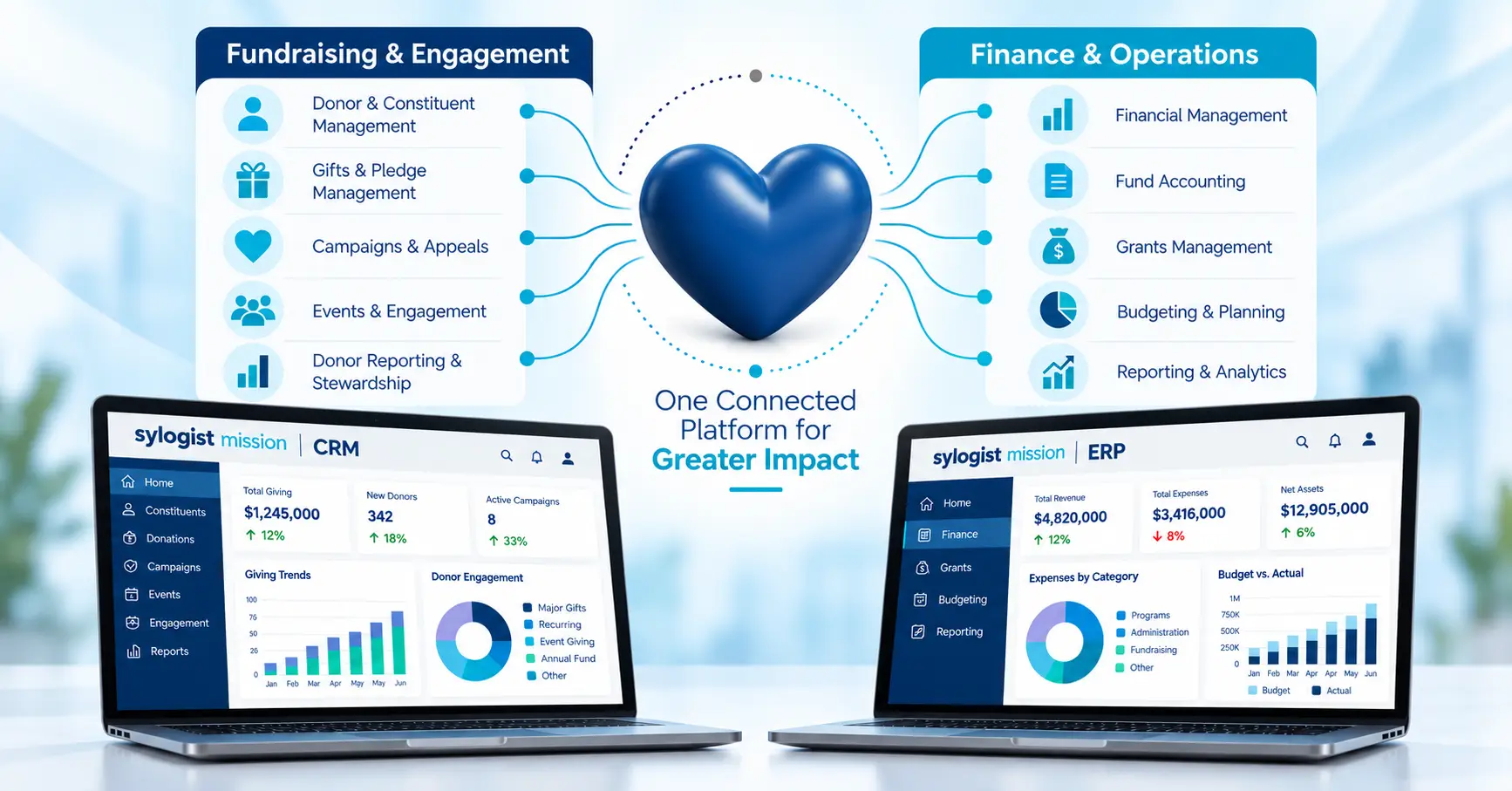
SylogistMission CRM, built on Microsoft Dynamics 365 and Azure, is designed to help nonprofit organizations manage donor relationships, fundraising activities, and constituent engagement.
With purpose-built nonprofit CRM capabilities, organizations can centralize constituent information and support more connected fundraising operations.
SylogistMission CRM offers capabilities for:
Donor and Constituent Management
Manage constituent profiles, giving histories, engagement activities, and relationship information within a centralized CRM environment.
Fundraising and Campaign Management
Track fundraising initiatives, donor interactions, and campaign activity to improve visibility into development efforts.
Major Gift and Relationship Management
Support fundraising teams with donor portfolio information, prospect tracking, and stewardship activities.
Reporting and Analytics
Use Microsoft reporting capabilities to analyze fundraising performance, engagement trends, and constituent information.
Microsoft 365 Integration
Connect nonprofit CRM activities with familiar Microsoft tools, including Outlook, Teams, and Excel, through supported integrations.
By combining nonprofit-specific functionality with Microsoft technology, SylogistMission CRM helps organizations establish a more connected approach to donor management and fundraising.
Build a Stronger Nonprofit CRM Data Strategy
Your nonprofit CRM is only as valuable as the information it contains.
Without clear data governance practices, organizations risk losing visibility into donor relationships, fundraising performance, and constituent engagement.
By avoiding these six common mistakes, nonprofits can improve data quality, strengthen accountability, increase user adoption, and make more informed decisions.
Whether you’re implementing nonprofit CRM software for the first time or looking to improve an existing donor database, investing in strong data management practices can help your organization get more value from its technology.
Explore SylogistMission CRM
Looking for nonprofit CRM software that helps your organization manage donor relationships, fundraising activities, and constituent information?
Discover how SylogistMission CRM combines Microsoft Dynamics 365 with purpose-built nonprofit functionality to support more connected fundraising operations.
See it in action. Connect with the SylogistMission team to learn how our nonprofit CRM software can support your fundraising and donor management goals.